Online Jewelry Training Classes for Metalsmiths
This is a free tutorial on gold recovery method using nitric acid to extract pure gold from old gold and scraps of gold by process of dissolving unwanted metals.
When I use this refining method, I regard the purity of the gold as 22kt, and I alloy it accordingly down to 18kt or 14kt. This gives me a safety margin so the gold is a slightly higher purity than I stamp it.
Safety disclaimers notwithstanding, this process uses nitric acid at 70% concentration, and caution must be used. Generally spoken, when one makes a mistake with strong nitric acid, one makes that mistake only once..... After that, the lesson is well learned. Only yellow gold can be refined, since nitric acid does not dissolve palladium. Nor platinum, for that matter.
This free jewelry tutorial follows the same format as in the paid for pdf jewelry tutorials. This gives you a good insight into the to technical teaching methodology.
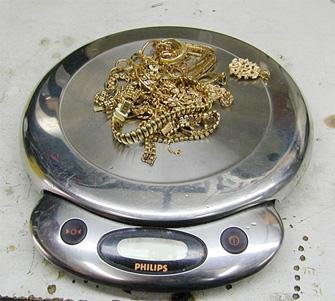
The old gold is weighed out and five times the weight of copper is added. So for example 40 grams of gold will need 200 grams of pure copper.

Since I am refining a large amount of 14kt and since that is more than I can melt at one time with five times the weight of the copper, I divide the gold and copper up into four, and for this tutorial I shall only be showing a portion of the melt.

I have a large plastic drum, which I fill up with water to make shot. A steel drum would be better.

To protect the plastic bottom, I use a stainless steel bowl and a plate below that to catch the hot metal shot, just in case it missed the bowl. It does sometimes.

Then I melt the copper.
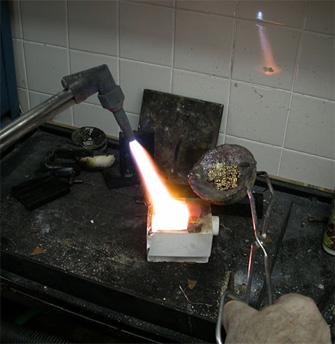
And I add one part by weight of the old jewelry to the 5 parts molten copper.

And then, when the gold is mixed with the copper, I pour it into the water. This makes the shot, and the finer the beads are, the quicker the nitric dissolves the mix. There are better methods, using steel baffles, but this is a quick method, without to much added hassle.

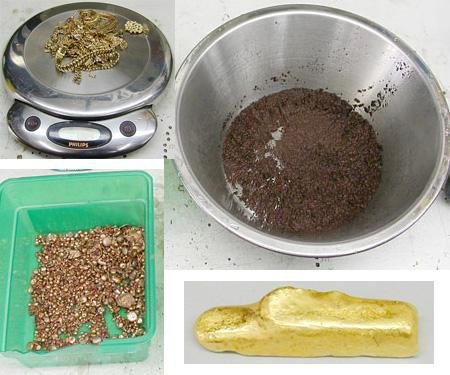
This is the resultant mix of copper and gold.

Then the fun starts. The bowl of alloy, a bottle of 70% nitric acid, a bucket of water. The water is there to wash spills off quickly, just in case a spill occurs. Much better that running to a tap screaming. Safety glasses and gloves are mandatory.

There is a decent reaction when nitric acid hits the copper/gold solution. A cloud of dangerous gas is released, so it is better to do this outside and stand up wind at the same time.

After the reaction is finished, and all is calm, more acid is added, until there is no more reaction. This means that all the copper, silver, and any other contaminants are dissolved and only the gold remains.

And this is the before and after picture. The fine gold looks just like used coffee grounds, and if you take it between your fingers, is crumbles just like coffee.

Then I mix it with alcohol and borax and saltpetre ( potassium nitrate) all available at your friendly chemist. It is not really necessary, because one can just melt is as is. The alcohol dries out the water and the borax and saltpetre makes melting easier.

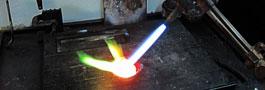
This picture shows the water/alcohol burnt off and the top of the mix melting. Suddenly, gold appears.

After the gold is melted in the normal fashion and cast into an ingot, it looks like this, ready to be alloyed down to whatever karat is required. This gold bar was only a portion of the gold that was refined on that day.
or select other projects from Jewelry Making Tutorials List
If you have any questions or wish to be notified of any new tutorials that are posted, email me.
This content is the intellectual property of Hans Meevis. More information on our Copyright and Privacy Policy